Ongoing Advocacy
As the Legislature enters the second year of its two-year session, MCN is regularly monitoring bills that impact the sector, submitting testimony, and advocating on behalf of nonprofits across the Commonwealth and the people they serve. Recently, MCN and a coalition of non-profits from all subsectors and regions opposed a proposed policy that would allow municipalities to require “payments in lieu of taxes” (PILOTs) from nonprofits. MCN opposes any change to the legal framework that supports organizations focused on charitable missions with 501(c)(3) status. Thus far, the Administration and Legislature have been responsive to preserving the tax-exempt status of nonprofits, and the needs and priorities of the sector.
If you have any questions, please contact Jessica Seney at jseney@macouncilofnonprofits.org.
Federal Impact Surveys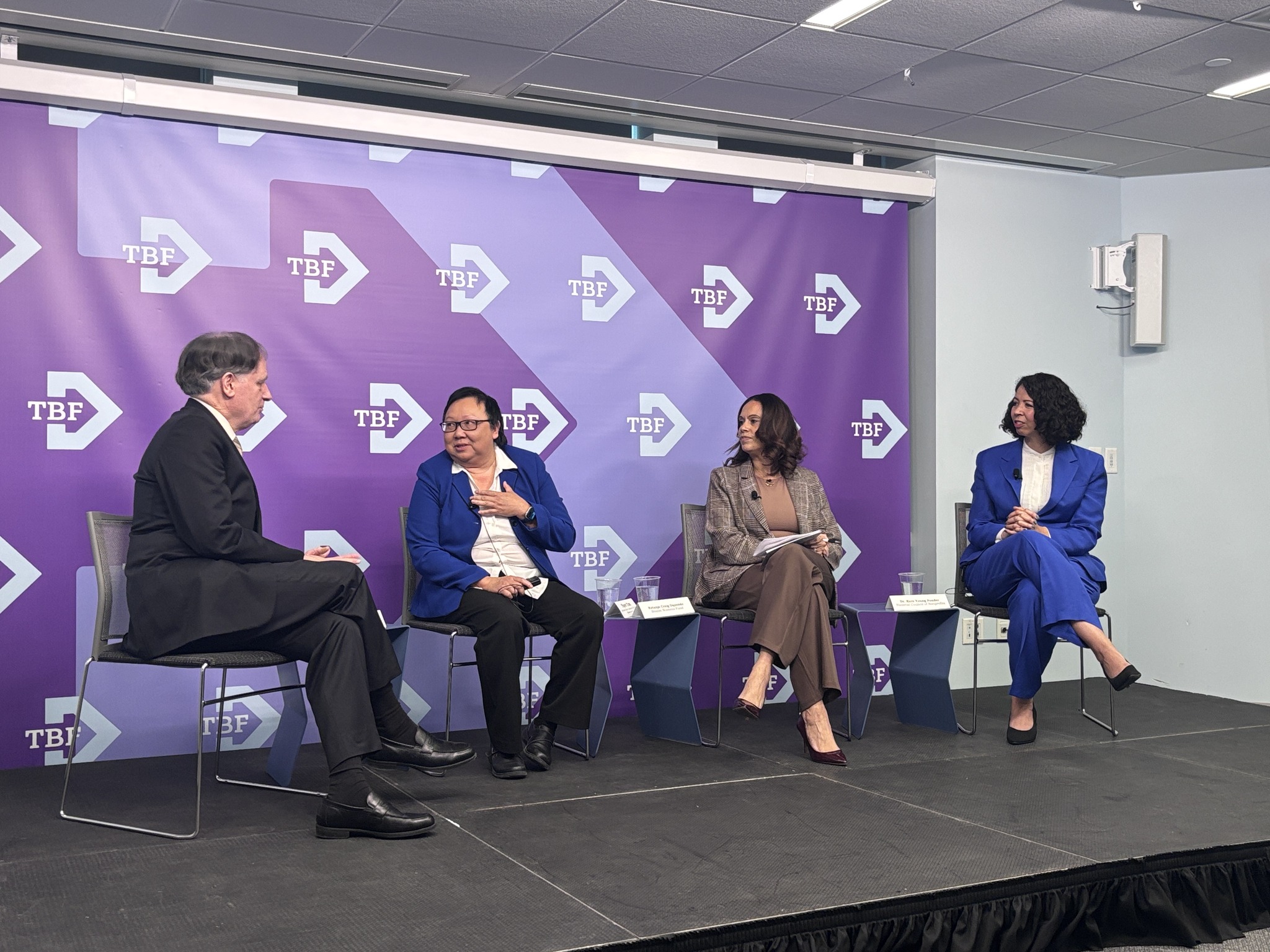
MCN, The Boston Foundation, and The MassINC Polling Group published the first of two Federal Impacts Surveys back in February of 2025. The survey emphasized the impacts of the evolving federal landscape on Massachusetts nonprofits and their constituents, and was promoted by 20+ outreach partners. Over 500 nonprofit leaders from across the Commonwealth completed the survey, and nearly 700 convened in-person and virtually for the reveal and discussion of the survey results, which included a live panel conversation with public and nonprofit leaders.
The second Federal Impacts Survey was published in January of 2026. This second survey demonstrated how Massachusetts nonprofits are pivoting and adapting one year into the current administration, and also helped the field, state budget decision-makers, and other allies understand the sector’s evolving needs more clearly. With the help of 20+ outreach partners, over 480 people responded to the survey, and nearly 500 attended the results discussion and panel.
Universal Deduction for Charitable Contributions Remains Uncapped
In 2025, MCN strongly advocated on behalf of the sector when the Administration’s budget proposal included a cap on the charitable contributions deduction. Working with members, MCN successfully articulated the needs of the sector and importance of individual contributions to House and Senate leaders such that the cap was not included in either branch’s budget proposals. The deduction remains universal and uncapped, which encourages greater giving to Massachusetts’ nonprofits.
Massachusetts Allows Stipend for Charitable Board Representation
In an effort to encourage job creation and growth in Massachusetts, the Legislature passed, and Governor Healey signed, H5100, an Act relative to strengthening Massachusetts’ economic leadership in November of 2024. This legislation encourages representation on boards by allowing a small stipend for board volunteers, and supports nonprofits through updated requirement thresholds. MCN worked to build support for and secure passage of these reforms.
Nonprofit board members may now receive a stipend up to $500 for their time and efforts related to board service without losing state statutory civil liability protections. Previously, if a nonprofit board member received compensation, they would not be entitled to the personal civil liability protections afforded by Massachusetts General Law Chapter 231 Section 85W. This change was proposed by MCN, and is in line with the Federal Volunteer Protection Act, which provides similar protections for nonprofit volunteers so long as they are not compensated more than $500.
“Allowing board members to receive a modest stipend for their time and effort will do a great deal to advance equity and representation for nonprofits and the people they serve,” said MCN’s CEO, Jim Klocke. “This provision enables nonprofits with smaller budgets to encourage board participation from individuals who may not otherwise be able to serve because of financial constraints. MCN hopes that with the allowance of a stipend, nonprofit boards will gain valuable voices and improve board representation.”
Massachusetts Amends Nonprofit Financial Statement Requirements
In November of 2024, Massachusetts also raised the thresholds for requiring nonprofits to submit reviewed or audited financial statements. Now, organizations that have gross support and revenue of more than $500,000 in a fiscal year (compared to $200,000 previously) must submit financial statements that have been reviewed or audited by an independent certified public accountant (CPA). Whether the statements must be audited or reviewed now depends on whether the gross support and revenue exceeds $1,000,0000 (compared to $500,000) in that year, with audits required for those with $1 million or more.
“MCN applauds the Legislature for recognizing the need to raise the thresholds, as they were last updated in 2008,” said Klocke. “Inflation and rising costs are straining nonprofits. This legislation alleviates a costly requirement and will have a real and important impact on smaller to medium-sized nonprofits.”
2023-2024 Session Accomplishments
MCN worked with a coalition to change Massachusetts law to allow nonprofit boards to permanently meet and vote remotely. The Legislature temporarily allowed remote meetings during the pandemic, but this allowance was set to expire in March 2023. After hearing from MCN and others about the importance of allowing remote meetings for purposes of increasing accessibility, the Legislature codified the permanent allowance in February 2023.
With the Executive Branch, MCN worked with Attorney General Campbell’s office to raise the threshold for requiring nonprofits to annually file an IRS 990 with the Form PC from $5,000 to $25,000 of gross support and revenue. The threshold increase saves small nonprofits significant time and expenses.
At the MA Supreme Judicial Court, MCN helped to shape the Justices’ opinion when deciding a case about the state wiretap law by joining with the Greater Boston Chamber of Commerce to submit an amicus brief on the potential consequences of the case. Lawsuits against nonprofit hospitals alleged that the use of common “ad-tech” software violated the wiretap law. MCN’s brief articulated the legislative history of the law, argued that lawmakers never intended the law to apply to ad-tech, and identified the ways in which MA nonprofits could be harmed if the court ruled in the Plaintiff’s favor. The SJC ruled in favor of the Defendants, and MCN was grateful to share the sector’s perspective and thereby protect its interests.